When I first started this journey, I was laser-focused on food — reading labels, questioning ingredients, doing the work. But it took me a while to realize I wasn’t giving that same attention to the everyday products in my home.
Once I learned what was hiding in fragrances, cookware, and plastic containers, I started swapping things out gradually, one product at a time.
Here are the swaps I made, organized room by room.
Kitchen
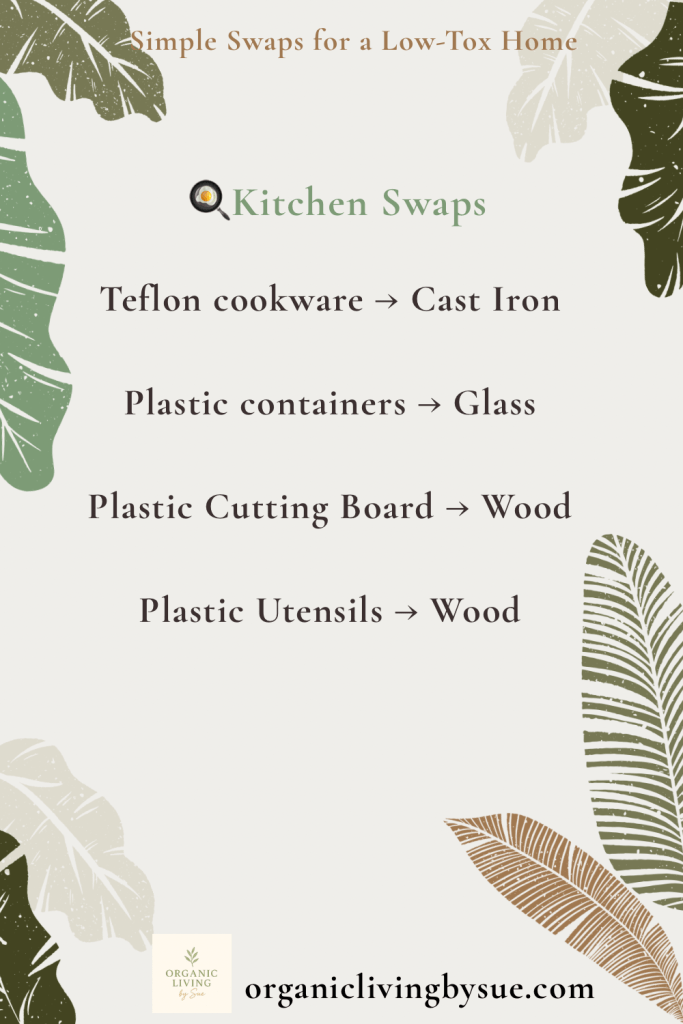
Nonstick (Teflon) Cookware
Why I swapped it: Traditional nonstick coatings can degrade over time and may release unwanted chemicals when scratched or overheated.
What I use instead: Cast iron, stainless steel, enameled cast iron
Plastic Food Storage Containers
Why I swapped it: Plastic containers wear down over time, especially with heat — and growing research on microplastics (tiny particles now found in food, water, and even the human body) was a big factor in my decision to switch.
What I use instead: Glass containers, mason jars, stainless steel containers
Plastic Cutting Boards
Why I swapped it: Plastic boards can develop grooves that are difficult to clean and may shed tiny plastic particles over time as you cut food.
What I use instead: Wood or bamboo cutting boards
Plastic Cooking Utensils
Why I swapped it: Like other plastics, they can shed microplastics and leach chemicals over time, especially with heat.
What I use instead: Wood utensils
Bathroom
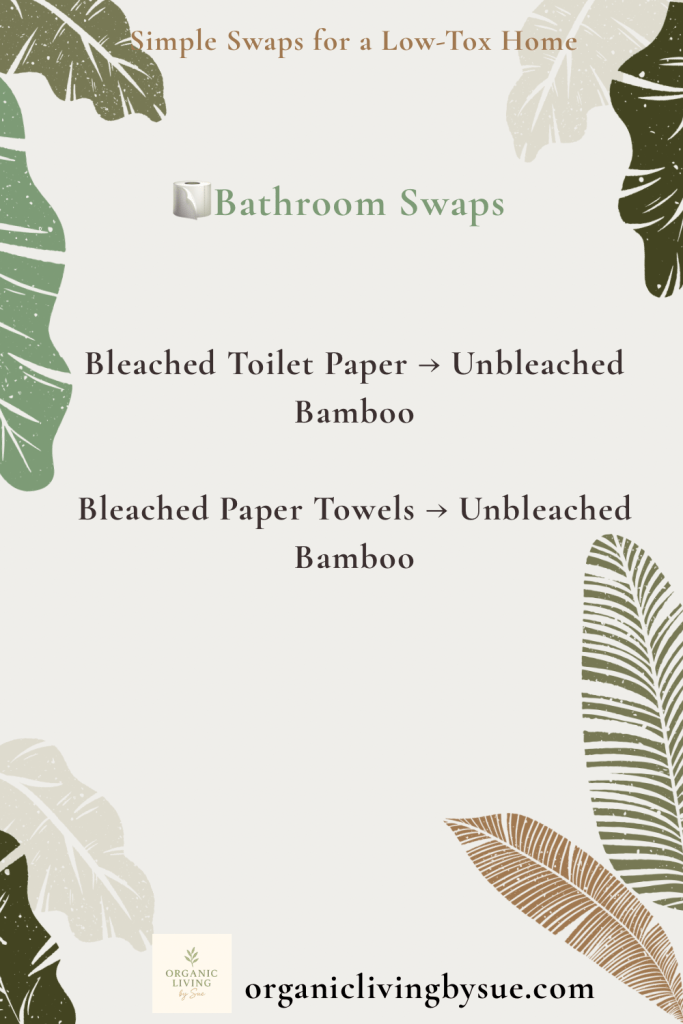
Bleached Paper Products (Toilet Paper & Paper Towels)
Why I swapped it: Many conventional brands are made from virgin tree pulp and bleached to achieve that bright white look. Since this is something my family uses daily, I wanted something simpler and more environmentally conscious.
What I use instead: Unbleached bamboo toilet paper, plastic-free packaging whenever possible
Bedroom & Around the Home
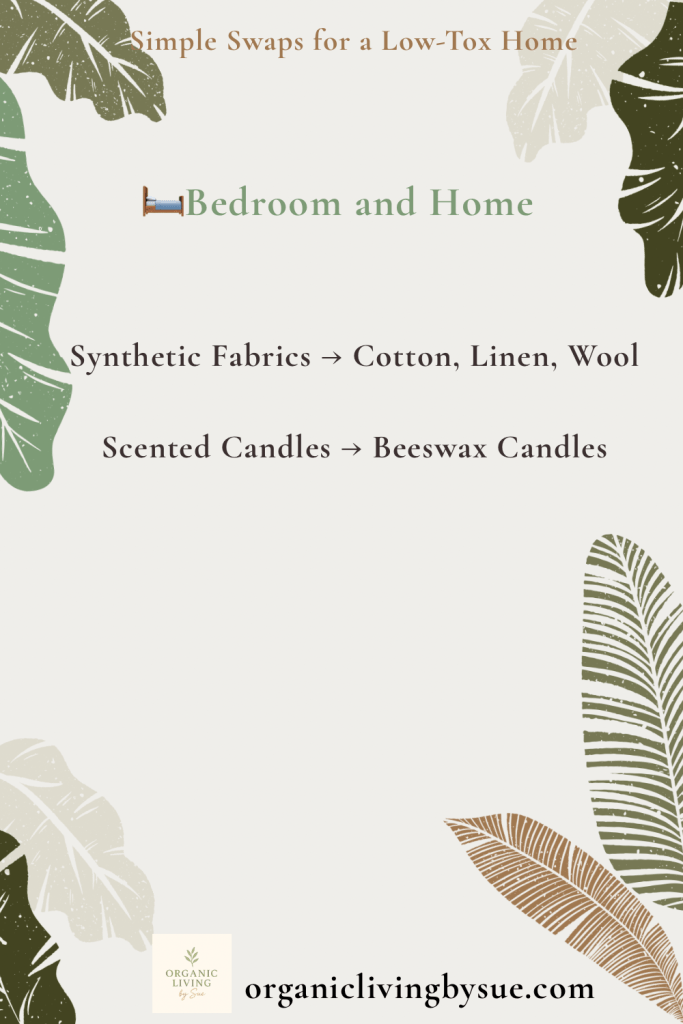
Synthetic Fabrics
Why I swapped it: Fabrics like polyester and nylon are made from petroleum compounds and shed microplastics. Some, like athletic wear, have even been found to contain PFAS.
What I use instead: Cotton, linen, wool, bamboo
Scented Candles
Why I swapped it: Conventional candles can release VOCs (volatile organic compounds) into the air.
What I use instead: Beeswax candles — completely natural, help purify the air, and burn significantly longer
Laundry
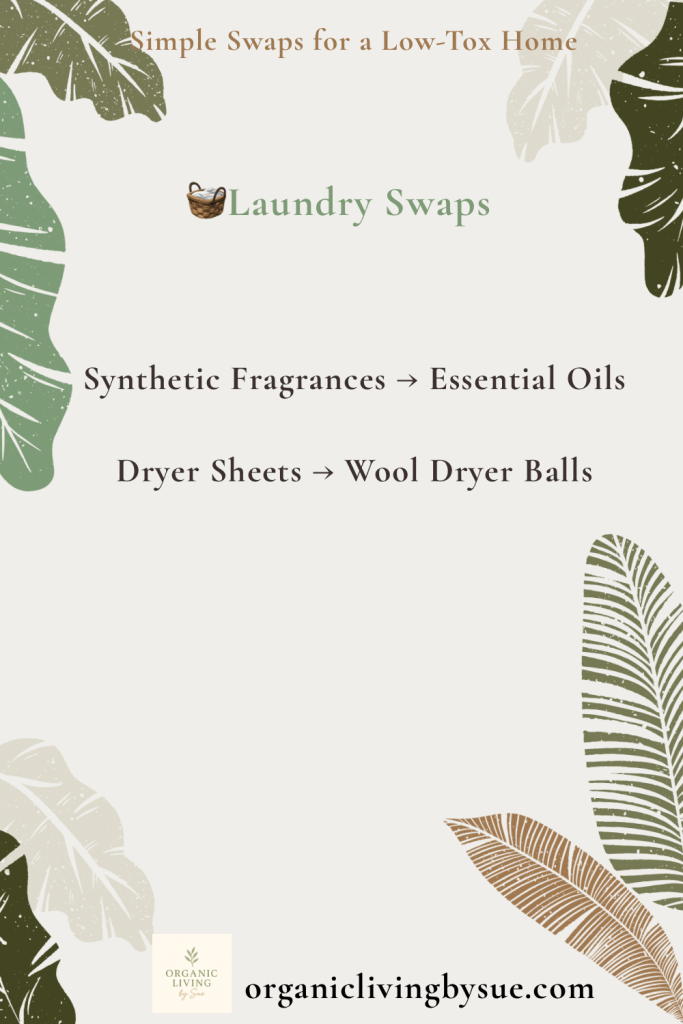
Synthetic Fragrances
Why I swapped it: Many personal care products, candles, air fresheners, detergents, and cleaning products contain fragrance blends that can include dozens — even hundreds — of undisclosed chemicals.
What I use instead: Essential oils, unscented products, naturally scented products
Dryer Sheets
Why I swapped it: They often contain synthetic chemicals that aren’t great for your health or the environment.
What I use instead: Wool dryer balls
None of these changes happened overnight, and they don’t have to for you either. Start with one room, one swap, and build from there.


